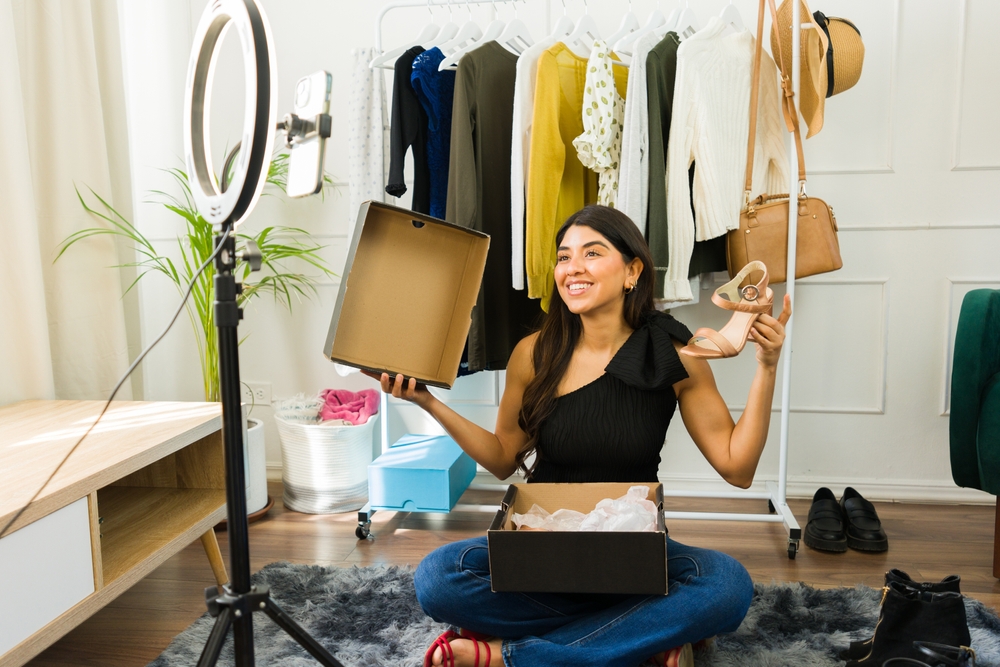
Once upon a time, “going shopping” meant begging your mom for a ride to the mall, linking arms with your besties, and killing three hours between Claire’s and Hot Topic before ending the day with an Orange Julius. Now? Shopping looks like a 19-year-old unboxing 47 neon tops from Shein on TikTok while thousands of strangers spam the comments with “OMG link plz.”
Welcome to the era of the haul video: part flex, part confession, part reality show where the only plotline is “how many things fit in this box.” And just when we thought that was peak internet consumerism, along came dupe culture – the art of proudly hunting down the knockoff version of whatever Kendall Jenner wore last week and calling it a win for the people. (It’s not fake, its frugal chic.)
But behind the dopamine rush of cardboard mountains and “Skims dupe for $12??” clickbait, something bigger is happening. We’re watching the internet turn shopping into performance, style into algorithm, and closets into content. It’s fun, a little messy and kinda scary – and it tells us everything about where fashion (and the planet) might be headed next.
Haul Nation
The OG Haul: YouTube in the Wild West Era
Before TikTok’s hyper-speed scroll, hauls were a slower burn. Picture 2008 YouTube: grainy webcams, bedroom fairy lights, and a teen holding up Forever 21 bags the size of a suitcase. Early haul videos were basically the digital version of coming back from the mall and giving your mom a low-budget fashion show. Only now, the “mom” is thousands of subscribers, and the mall trip lives forever online.
This was aspirational content 1.0 – you didn’t just see what someone bought, you saw how they lived. Their room décor, their squeals of excitement, their low-key flex that they could drop $200 at Hollister without breaking a sweat. Haul videos were half shopping guide, half lifestyle fantasy.
From Hobby to Hustle
Fast forward to 2020, and suddenly, hauls weren’t just cute, they were careers. TikTok collapsed shopping, aesthetics, and clout-chasing into one neat package. Creators realized that “unboxing a mountain of clothes” was algorithm catnip: bright colors, quick cuts, constant novelty. Brands noticed too, and started sponsoring hauls or sending free products.
The vibe shifted. What used to be “look at my new jeans” became “content calendar meets quarterly earnings report.” Every oversized cardboard box screamed: influencer tax write-off.
Why We Watch (Even If We’re Not Buying)
But wait, most people watching these hauls aren’t about to buy 87 Shein tops. They’re there for the ASMR of crinkling packaging, the dopamine hit of newness, and the parasocial intimacy of “shopping with a friend.” It’s retail therapy, outsourced.
Psychologists would call it vicarious consumption. Meme culture calls it “girl dinner, but for capitalism.” You don’t need to spend money to feel like you’ve participated – you’ve clicked, commented “cute!!,” and gotten your micro dose of shopping serotonin.
Hauls as Performance
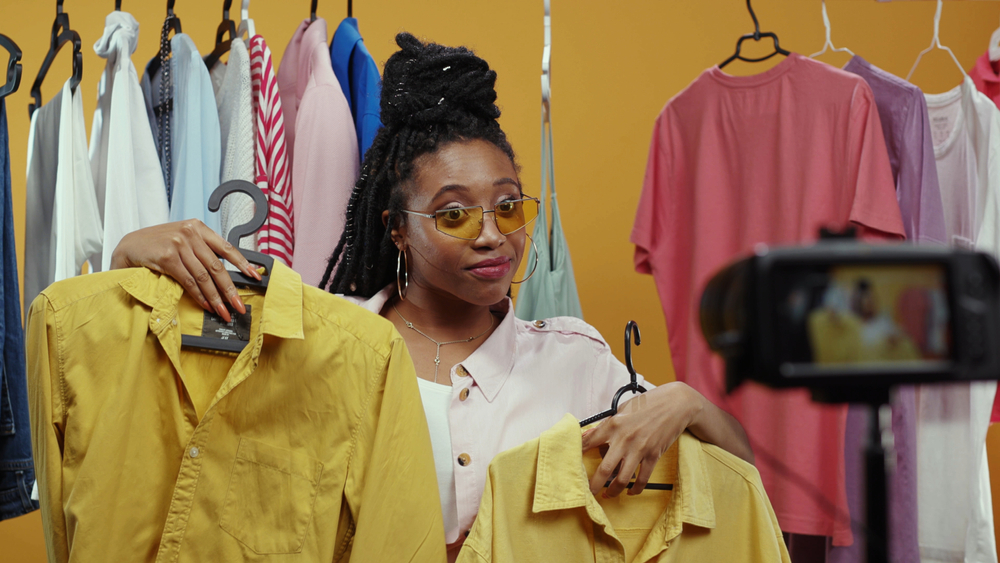
The haul is no longer about the clothes – it’s about the spectacle of having them. Like reality TV, the drama isn’t in what’s said, but in what’s revealed. How big is the box? How many dresses are in the pile? Will the zipper break on camera? Every item is an episode, every comment a laugh track.
Haul nation isn’t just about fashion, it’s the proof that shopping itself (the act, the ritual, the unboxing, etc.) has become content. And in the era of infinite scroll, content is king, queen, and entire royal court.
Enter the Dupe Wars
From “Fake” to “Found It for Less”
Let’s be clear: “dupes” aren’t just knockoffs. They got a rebrand and a PR team. Instead of shady back-alley Louis Vuitton fakes that peeled after one rainstorm, dupes are marketed as savvy hacks. A $20 Amazon “dupe” of $80 Lululemon leggings isn’t a crime against fashion, it’s a flex of financial literacy. Girl Math at its best.
The language shift is important. “Fake” was shame. “Dupe” is pride. Saying “it’s a dupe” online is basically announcing, “I cracked the matrix, and I’m not bankrupt for it.”
TikTok Made Me Dupe It
TikTok is the dupe culture HQ. Search #dupe and you’re bombarded with everything from drugstore mascara that “slaps harder than Dior” to “Amazon Birkin” bags that definitely won’t last more than two brunches. But it doesn’t matter. The point isn’t durability, it’s virality.
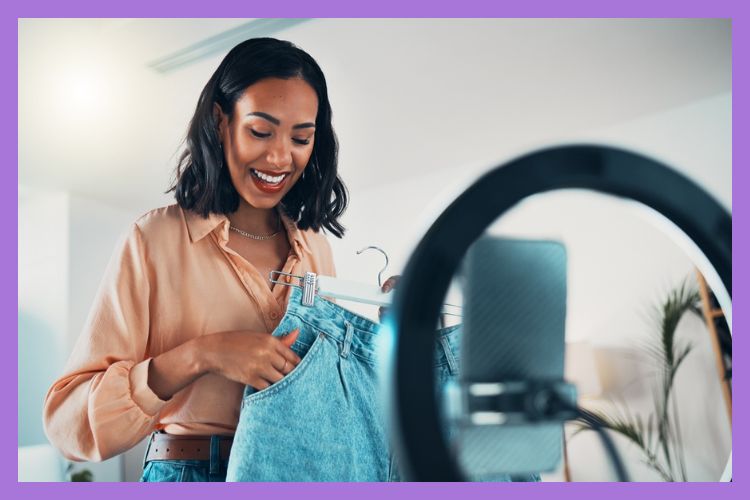
Finding and sharing dupes is a sport. Whoever finds the closest match for less money wins the internet for the day. The FYP is like a constant Price Is Right episode, except instead of Bob Barker, it’s an 18-year-old with a ring light yelling “GUYS THIS IS A $12 DUPE FOR ARITZIA.”
Dupe as Cultural Currency
Once upon a time, flexing was about how much you could spend. Now it’s about how much you didn’t. The dupe economy rewards being clever, fast, and plugged in. If you know where to get the viral Lululemon belt bag for $9.99, you’re not cheap, you’re in the know. It’s fashion democratized, sure. But it’s also fashion hyper-speed. The more dupes flood the internet, the faster trends die. One viral haul of $12 platform boots and suddenly the entire trend cycle collapses in three weeks. RIP microtrend, we hardly knew you.
The Ethical Elephant in the Room
Of course, there’s a catch. Dupes blur into counterfeits real quick. They also deepened our addiction to fast fashion: endless cheap production, landfills, and déjà vu of the same blazer 40 times. But TikTok doesn’t want you to think about carbon footprints, it wants you to click “link in bio.”
So we keep scrolling, keep shopping, keep flexing our bargain wins. Because in 2025, it’s not about what you bought. It’s about how strategically you did it.
The Algorithm Wears Prada
Your FYP, But Make It Fashion
The algorithm doesn’t just know what you like, it knows what you will like before you do. One minute you’re watching a haul of Zara basics, the next your For You Page is a conveyor belt of “Skims dupes,” “Amazon must-haves,” and “Sephora haul under $50.” Suddenly you're three swipes deep into shopping content you never asked for, but now desperately “need.”
Forget Vogue’s September issue. Your FYP is the new glossy magazine spread, except instead of Anna Wintour, it’s the algorithm deciding that, yes, you do want that puffer jacket in three colors.
Virality = Value
Products today don’t go viral because they’re good, they’re good because they go viral. The cycle is brutal: one TikTok gives a $6 claw clip 4 million views, and boom, it’s sold out worldwide in 48 hours. Then the dupes hit. Then the hauls. Then the “here’s what I ordered vs. what I got” reactions. By the time you track down the product, the trend has already moved on.
The algorithm thrives on this churn. It doesn’t care if the sweater pills after one wash, it cares if the sweater racks up watch time. Style consumption has become less about personal taste, more about chasing whatever the algorithm serves up like a waiter with endless apps.
Microtrends on Steroids
Fashion used to operate in seasons. Now it operates in scrolls. One day its ballet-core, the next its tomato girl summer, and by Thursday its “mob wife aesthetic.” The speed is dizzying – entire aesthetics live and die on TikTok before a single Zara shipment hits the shelves.
And in this ecosystem, hauls and dupes aren’t side characters. They’re the main plot devices. They keep trends alive just long enough to squeeze every cent out of them before the algorithm pushes the next vibe.
Algorithm Chic
The cruel genius? You feel like you’re making choices, but the algorithm is essentially your stylist. It’s feeding you what’s viral, teaching you what’s “in,” and low-key shaping your identity with every scroll. Your taste is now a collaboration between you, your screen time, and a recommendation engine in Silicon Valley.
Congrats, you’re not just wearing fast fashion. You’re wearing fast data.
Sustainability? We Don’t Know Her
The Party We Don’t Talk About
Haul videos are fun, until you remember they’re basically highlight reels of overconsumption. The pile of Shein tops might look like confetti on screen, but behind the scenes it’s more like a landfill preview. We love the dopamine hit of new clothes, but the environmental hangover? Not so cute.
TikTok won’t show you the factory worker who made that $9 crop top, or the microplastics that’ll still be floating in the ocean long after “clean girl aesthetic” stops trending. The unboxing ends when the box is empty, not when the planet pays the bill.
Fast Fashion Is the Pipeline, Dupes Are the Fuel
Dupes feel thrifty, but really, they just funnel us deeper into the fast fashion vortex. A $12 dupe of a $90 bodysuit is still a $12 bodysuit made with synthetic fabrics, rushed labor, and one heck of a carbon footprint.
It’s like thinking diet soda cancels out pizza. Sure, you saved money, but the system still cashes in – and the planet still gets wrecked.
The Closet Overflow Problem
Sustainability influencers love the capsule wardrobe. TikTok haul creators love to get that cute tank top in all 12 color-ways. The tension is real. Fashion is supposed to be fun and expressive, but we’ve reached a point where closets are collapsing under their own weight. And still, the algorithm whispers: “buy more, buy faster, buy now.”
The irony? Haul videos about donating clothes rarely go viral. Nobody wants to watch a three-minute clip of someone responsibly recycling their jeans. Chaos sells, restraint doesn’t.
The Big Disconnect
Interestingly, Gen Z (and younger millennials) are the most eco-anxious generation yet. They’ll march for climate action on Friday, then post a Zara haul on Saturday. Not because they don’t care, but because the system makes it so easy, cheap, and rewarding to buy more. Sustainability is a value; consumption is a habit. And habits are harder to break than trends.
So yes, sustainability matters. But in the world of haul videos and dupe culture, it’s the guest nobody invited to the party. We know she’s waiting outside. We just don’t want her killing the vibe inside.
Why We Can’t Stop Watching
It’s Not Just Clothes, It’s Content
Nobody needs to see 19 pairs of the same parachute pants. And yet… we watch. Why? Because hauls aren’t really about fashion, they’re about story. The big box arrives, the creator squeals, the pile grows, the comments explode. It’s low-stakes drama with a side of retail ASMR.
It’s not just a top, it’s the thrill of what’s next. Every crinkle of tissue paper is a cliffhanger. Every zipper test is a plot twist. Netflix could never.
Shopping, But Make It Parasocial
Watching hauls scratches the same itch as going to the mall with a friend, except the “friend” is a girl in Utah with 2.3M followers. You don’t just see the clothes - you get her bedroom décor, her personality, her little jokes. It feels intimate, like you’re in on her secrets. Parasocial shopping: cheaper than therapy, and way more colorful.
The comment section seals the deal. “Omg you NEED to keep the green one,” strangers shout, like they’re part of the fitting room squad. Shopping becomes a group sport, and FOMO becomes the referee.
Identity by Proxy
But we’re not just borrowing style ideas. We’re borrowing identity. If that creator is “clean girl aesthetic,” watching her haul makes you feel like maybe you are too, even if you’re currently in sweatpants with Dorito dust on your fingers. The vibe transfers through the screen.
That’s the secret: hauls and dupes aren’t just about buying things. They’re about curating a self. You don’t need to own the clothes – just knowing about them makes you feel plugged in, aligned, part of the culture.
In short, we can’t stop watching because hauls aren’t just consumerism. They’re lifestyle roleplay, identity cosplay, and community theater rolled into one. And deep down, we’re all sucker for a good show.
Possible Futures of Style Consumption
Scenario 1: Eco-Cynical Mode
The future no one wants but we’re probably headed toward if nothing changes. Hauls get bigger, dupes get faster, microtrends die in 48 hours, and the planet becomes one giant closet collapse. Imagine landfill “aesthetics” trending on TikTok because the piles of discarded polyester start resembling modern art. (Not cute, but inevitable if fast fashion keeps feeding the scroll monster.)
Scenario 2: Conscious Cool
On the brighter side, Gen Z could flip the script. Thrifting, clothing rentals and resale apps (Depop, Vinted, Poshmark) might become the new hauls. Sustainability could evolve from guilt trip to flex. Think: “capsule wardrobe check” videos getting as many likes as mega-hauls.
Also in the mix: digital fashion. Entire fits that only exist on your avatar or in AR filters. Yes, it sounds dystopian. But honestly? No laundry or landfill is sounding a lot like a win.
Scenario 3: Algorithmic Wardrobes
AI styling is already creeping in. Picture this: you scroll TikTok, and your FYP not only shows you the dupe but auto-fills your cart. Subscription clothing boxes meet Spotify Wrapped. Every month, an algorithm builds your “Top 10 Outfits” playlist. Creepy? Yes. Convenient? Also yes.
The vibe: you think you’re choosing your aesthetic, but the algorithm already set your style mood board six months ago. Free will, but make it algorithm-chic.
Scenario 4: Hybrid Chaos
The most likely future? A mash-up of all of the above. People flex their $8 Amazon belt bag while also bragging about their thrifted Levi’s. Capsule closets coexist with haul culture, and fashion identity becomes a toggle between “eco-conscious” and “dupe-obsessed,” depending on the day (or paycheck).
Basically, style becomes less about cohesion and more about curation. You’re not building a closet, you’re building a content feed, with outfits as the posts.
When Consumption Becomes Both Spectacle and Statement
At the end of the day, haul videos and dupe culture aren’t just quirky internet trends, they’re mirrors. Mirrors of our shopping habits, our dopamine addictions, our need to flex without going broke. They turn closets into content, spending into spectacle, and style into something that feels communal, even when it’s just you and your phone at 2 a.m. whispering “add to cart.”
We watch because it’s entertaining. We participate because it’s easy. And we ignore the sustainability elephant in the room because she kills the vibe, and the algorithm isn’t inviting her anyway. That’s the tension: fashion as joy vs. fashion as junk drawer.
But maybe that’s the point. The future of style consumption won’t be about choosing between eco-conscious halos or fast fashion hauls. It’ll be about navigating the messy, hybrid middle – where a thrifted blazer and a $9 dupe happily coexist in the same outfit (and the same TikTok).
What haul videos prove is that fashion is no longer confined to what you wear – it’s how you share. The runway isn’t Milan; it’s your FYP. The fashion editors aren’t Vogue; they’re the algorithm. Because in the end, haul videos aren’t just about what we buy, they’re about how the internet taught us to turn every purchase into a performance